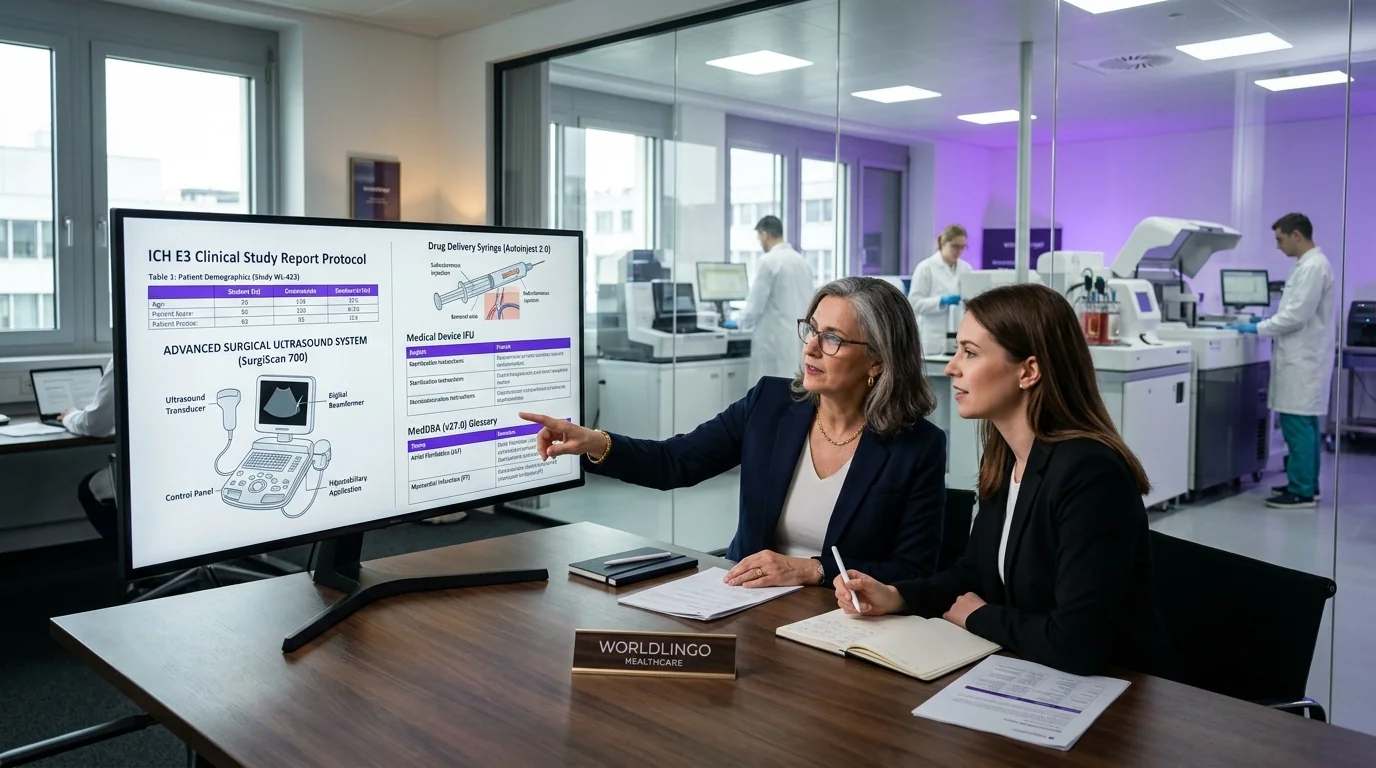
Medical Device Translation: A Guide to MDR Compliance and IFU Regulatory Documentation
Medical device translation is critical for regulatory compliance. This guide covers MDR requirements, IFU best practices, and regulatory document translation strategies.

Introduction
Medical device manufacturers entering global markets, especially the EU, face stringent regulatory requirements. Translation is not just about language; it's a critical component of regulatory compliance. Errors can lead to registration failures, market access delays, or even safety risks. This article explores key aspects of medical device translation, including MDR compliance, IFU translation, and regulatory document translation, offering practical strategies and best practices.
The Challenges of Medical Device Translation
Regulatory Complexity
The EU Medical Device Regulation (MDR 2017/745) imposes specific language requirements for labeling and IFUs. Translations must accurately convey technical information while meeting target market regulations.
Terminology Consistency
Medical device terminology is highly specialized and must be consistent across languages. Terms like "sterile," "implantable," must be translated precisely to avoid ambiguity.
Cultural Adaptation
Differences in medical practices, units, and symbols require localization to ensure user comprehension.
Key Points for MDR-Compliant Translation
Language Requirements
MDR mandates that IFUs and labels be in the official language of the member state. Translations must be complete and accurate.
Technical Documentation Translation
Technical documents (e.g., clinical evaluation reports, risk management files) must be translated into the submission language, maintaining consistency with source.
Updates and Maintenance
When regulations change, translations must be updated promptly to remain compliant.
Best Practices for IFU Translation
Clarity and Readability
Use plain language, avoid complex jargon, and ensure patients and healthcare professionals understand.
Formatting and Layout
Preserve original layout, including figures and warning boxes, to prevent information loss.
Validation and Review
Translations must be reviewed by medical experts to ensure accuracy.
Regulatory Document Translation Process
Document Inventory
Identify all documents needing translation, such as product instructions, labels, and clinical data.
Translation and Review
Employ professional translation and medical review processes to ensure quality.
Submission and Tracking
After translation, submit to regulatory bodies and track feedback.
Translation Quality Management
Terminology and Translation Memory
Build termbases and translation memories to ensure consistency and efficiency.
Review and Validation
Multi-level review: linguistic, medical, and regulatory.
Continuous Improvement
Optimize processes based on feedback.
Selecting a Translation Provider
Professional Qualifications
Choose providers with experience in medical device translation and knowledge of MDR.
Quality Processes
Assess their quality management, e.g., ISO 13485 certification.
Case Studies
Review relevant cases to evaluate capability.
Conclusion
Medical device translation is crucial for international market entry. Follow this guide to ensure compliance and quality. For professional support, contact Linguist for a quote and consultation.
Expanding globally or tackling translation compliance?
ISO 17100 certified. Get instant localization readiness diagnostic & quotation.
Share this article