Legal Contract Translation (Chinese-English): Best Practices for Contract Review and Compliance
Legal contract translation between Chinese and English involves high-stakes clauses and legal validity. This guide provides contract review best practices for NDA, joint venture agreements, ensuring accuracy and compliance.
Introduction: Challenges and Risks in Legal Contract Translation
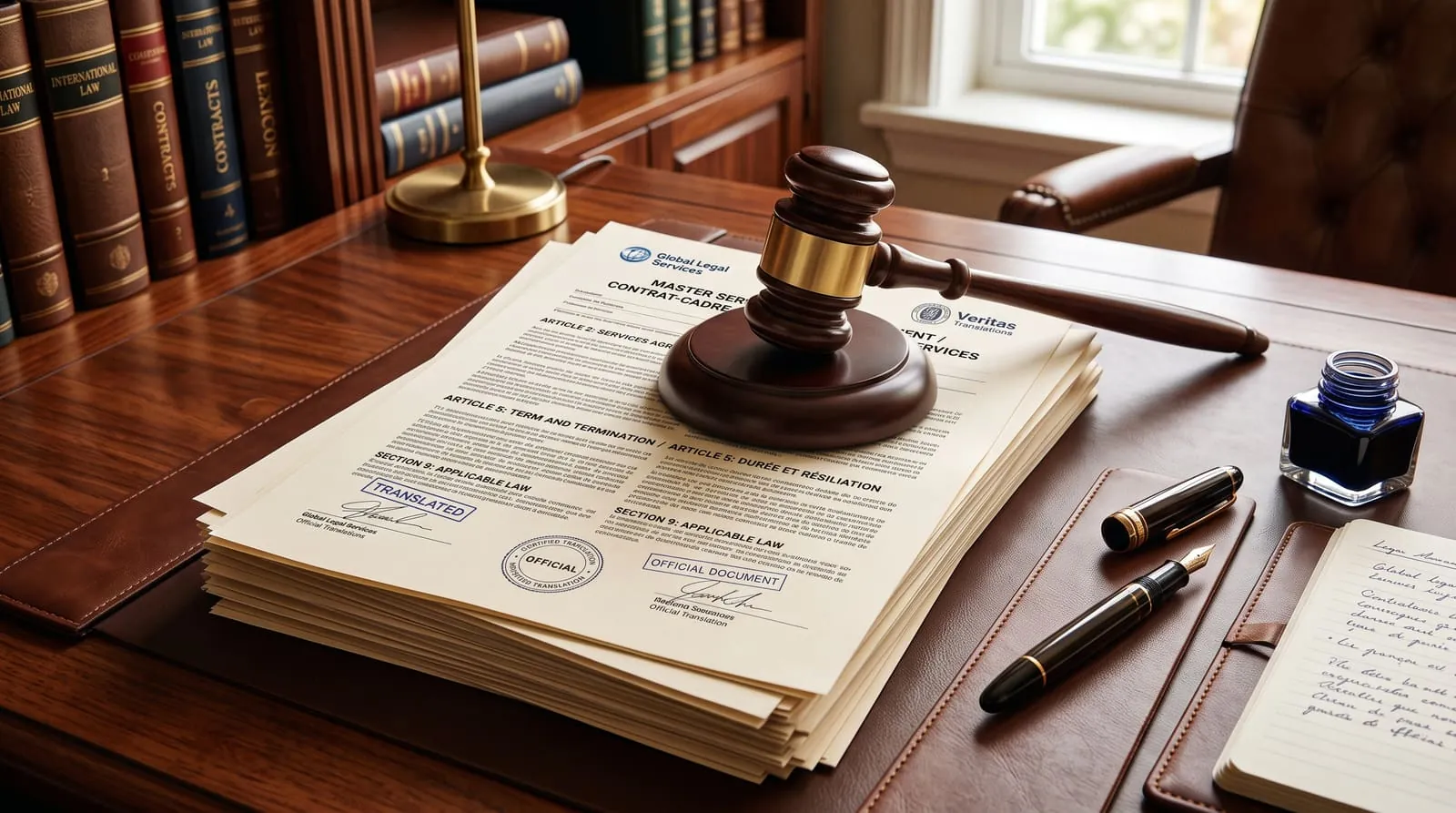
In cross-border business, legal contracts are the cornerstone of protecting both parties' interests. However, legal contract translation between Chinese and English is not a mere linguistic conversion; it involves complex legal systems, cultural differences, and terminology precision. A mistranslated term can render a clause unenforceable or even lead to litigation. Industry statistics reveal that over 60% of cross-border contract disputes stem from translation ambiguities. Therefore, contract review and professional legal translation services are indispensable for enterprises expanding globally.
Core Principles of Legal Translation: Accuracy, Consistency, and Compliance
Accuracy: Precise Correspondence of Legal Terms
Legal terms are often unique and determinate, such as "consideration" (对价), "indemnity" (赔偿), and "force majeure" (不可抗力). Translators must find legally equivalent terms in the target language rather than resorting to literal translation. For example, the Chinese "违约金" corresponds to "liquidated damages" in common law, but one must distinguish its legal effect from "penalty."
Consistency: Terminology Uniformity and Contextual Coherence
In long contracts, the same term must be consistently translated throughout. For instance, "Party A" should always be "甲方," and "breach" should always be "违约." Using terminology databases and translation memory tools ensures consistency.
Compliance: Meeting Legal Requirements of the Target Jurisdiction
Translations must conform to the legal style and formatting of the target country. For example, US contracts often include an "entire agreement" clause, while Chinese contracts emphasize the "good faith" principle under the Civil Code. Contracts involving data processing must comply with GDPR or China's Personal Information Protection Law.
Key Steps and Checklist for Contract Review
Contract review is a critical step to ensure translation quality. Below is a practical checklist:
- Legal Terminology Verification: Check that all legal terms use standard translations, referencing authoritative legal dictionaries.
- Clause Completeness: Ensure every clause (e.g., governing law, dispute resolution) in the original is reflected in the translation without omission.
- Numbers and Dates: Verify accuracy of amounts, dates, percentages, and other numerical data.
- Format and Signatures: Check that the format aligns with target jurisdiction conventions and signature pages are complete.
- Cultural Adaptation: Adjust culture-specific expressions, such as clarifying "Christmas clause" (force majeure) for clarity.
Translation Essentials for Common Legal Documents
NDA (Non-Disclosure Agreement)
The NDA is the first line of defense for protecting trade secrets. When translating, pay special attention to the definition of "confidential information," restrictions on "disclosure," and the expression of "term." For instance, "survive termination" should be clearly translated as "存续条款" indicating that the clause remains effective after termination.
Joint Venture Agreement
Joint venture agreements involve complex clauses on equity structure, management control, and profit distribution. Translators must ensure accuracy of terms like "capital contribution" (出资), "voting rights" (表决权), and "deadlock resolution" (僵局解决). Additionally, interpretations of "fiduciary duty" vary across jurisdictions, so annotations may be necessary.
Key Terminology Cross-Reference Table
| English Term | Chinese Translation | Definition |
|---|---|---|
| Consideration | 对价 | The value given in exchange for a promise in a contract |
| Indemnity | 赔偿 | An obligation to compensate another for losses arising from specified events |
| Force Majeure | 不可抗力 | Unforeseeable, unavoidable, and insurmountable circumstances |
| Liquidated Damages | 违约金 | A predetermined amount of damages for breach |
| Governing Law | 管辖法律 | The legal system that governs the contract |
| Confidential Information | 保密信息 | Non-public information disclosed by one party to another |
| Survive Termination | 存续条款 | Clauses that remain effective after contract termination |
| Capital Contribution | 出资 | Funds or assets contributed by a joint venture partner |
| Fiduciary Duty | 信义义务 | A legal duty arising from a relationship of trust |
FAQ (Frequently Asked Questions)
Q1: How can legal contract translation avoid terminology ambiguities?
A: First, ensure the use of standard legal terms, referencing authoritative dictionaries like Black's Law Dictionary or 元照英美法词典. Second, for cross-jurisdictional concepts, such as differences between common law and civil law, add translator's notes or use functional equivalence. Finally, have translators with legal backgrounds review the work, and use terminology databases to maintain consistency.
Q2: How to balance literal and free translation during contract review?
A: Legal translation emphasizes fidelity to the original, but it does not mean word-for-word translation. For sentence structures, follow the legal style of the target language; for culture-specific expressions, use free translation with annotations to ensure legal effect is not compromised.
Q3: How to handle conflicts between different legal systems when translating a joint venture agreement?
A: First, clarify the governing law chosen in the contract. If the contract specifies English law, the translation must align with English legal terminology. Second, for clauses that may conflict, maintain precision in the translation and recommend legal consultation. Finally, consider adding a "language prevails" clause to specify which language version takes precedence in case of interpretation disputes.
Conclusion: Strategic Recommendations for Ensuring Quality Legal Contract Translation
Legal contract translation between Chinese and English is a specialized and high-risk endeavor. To ensure accuracy and compliance in contract review, enterprises should:
- Engage professional legal translation services: Ensure translators have legal backgrounds and relevant industry experience.
- Implement multi-level review: Include self-review by the translator, legal expert review, and final review by a native speaker.
- Leverage technology tools: Use translation memory, terminology management, and QA tools to enhance consistency.
- Clarify language priority: Specify in the contract which language version prevails in case of disputes.
If you are preparing cross-border contracts or require professional contract review services, feel free to contact our legal translation team for tailored solutions.
Expanding globally or tackling translation compliance?
ISO 17100 certified. Get instant localization readiness diagnostic & quotation.
Share this article