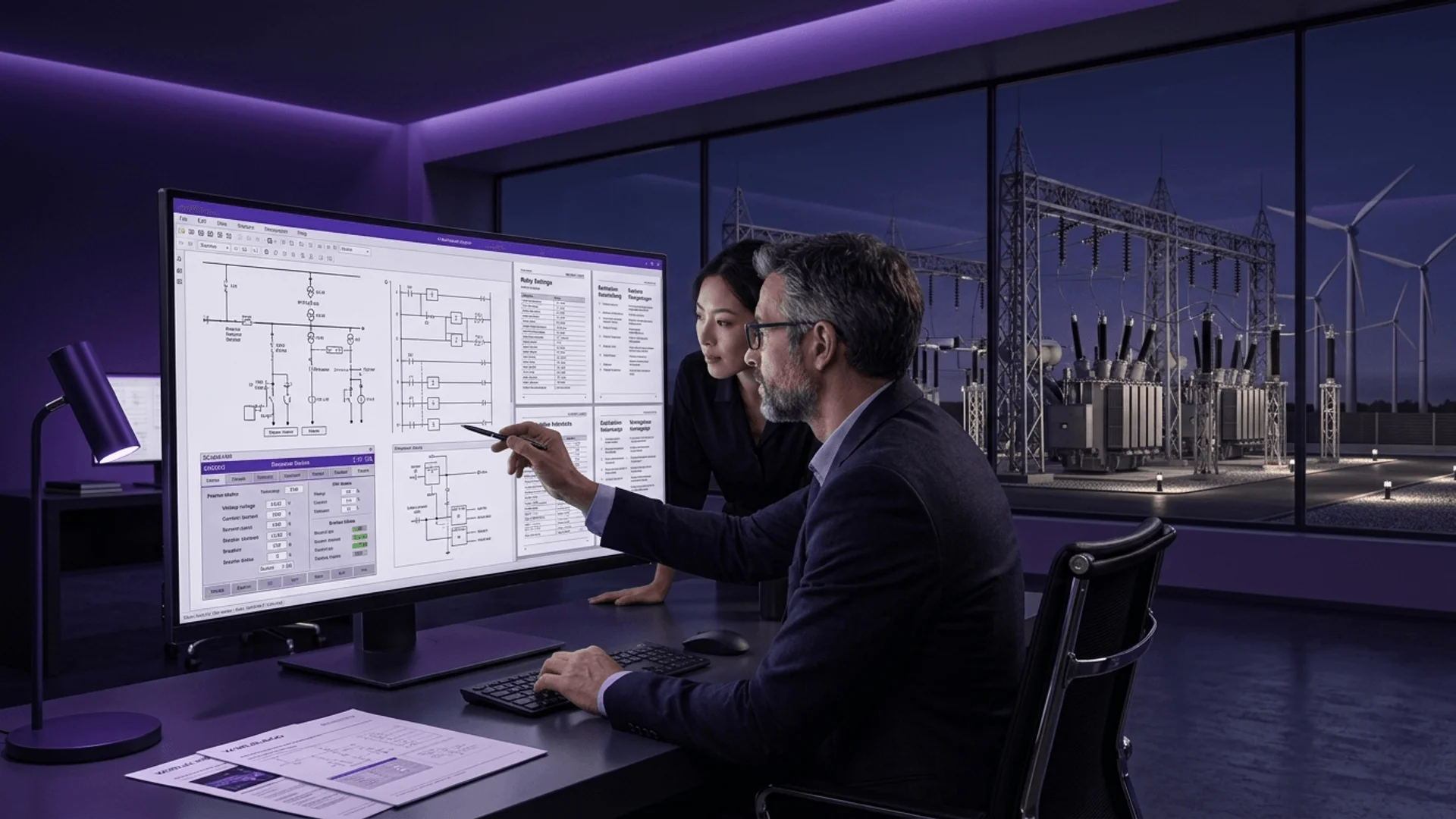
Energy Storage System Technical Document Translation: Key Points for BESS and PCS Grid-Connection Documentation
Explore the essentials of translating energy storage system (BESS) technical documents, focusing on PCS and grid-connection materials to ensure accuracy, compliance, and project success.
Energy Storage System Technical Document Translation: Key Points for BESS and PCS Grid-Connection Documentation
As the global energy transition accelerates, battery energy storage systems (BESS) are becoming pivotal for grid frequency regulation and renewable energy integration. However, the quality of technical documentation localization directly impacts project approval, compliance, and operational safety. This article delves into the core aspects of translating energy storage system technical documents, with a focus on PCS (Power Conversion System) and grid-connection materials, offering actionable guidance for industry professionals.
1. Scope and Specifics of Energy Storage Technical Documentation
Energy storage technical documentation spans a comprehensive range, from system design to operational manuals. Common types include:
- System Design Documents: Capacity configuration, topology, thermal management schemes.
- Equipment Manuals: Installation, operation, and maintenance guides for BMS, PCS, and EMS.
- Grid-Connection Materials: Interconnection applications, grid compliance test reports, protection settings calculations.
- Safety and Compliance Documents: Declarations of conformity to standards such as IEC 62619, UL 9540.
These documents are highly specialized, dense with terminology, and involve multidisciplinary knowledge (electrical, chemical, control, communication). Without domain expertise, translation can introduce ambiguities, potentially leading to safety risks.
2. Precision Strategies for BESS and PCS Terminology
Terminology consistency is foundational in technical translation. For BESS and PCS, consider the following strategies:
| English Term | Standard Translation (Chinese) | Notes |
|---|---|---|
| BESS (Battery Energy Storage System) | 电池储能系统 | Industry standard |
| PCS (Power Conversion System) | 储能变流器 | Avoid confusion with "inverter" |
| SOC (State of Charge) | 荷电状态 | Core battery parameter |
| SOH (State of Health) | 健康状态 | Reflects battery aging |
| Grid-tied | 并网 | Opposite of off-grid |
| Fault Ride-Through | 故障穿越 | Grid performance requirement |
Practical Recommendations:
- Establish a Project Glossary: Before translation, have engineering teams provide core terminology or refer to standards like IEC or GB/T.
- Maintain Consistency: Use the same translation for a term throughout the document to avoid mix-ups.
- Retain Necessary English: Keep model numbers, protocol names (e.g., Modbus TCP), and standard designations in original form; translate only descriptive content.
3. Compliance and Localization Requirements for Grid-Connection Documentation
Grid-connection materials are critical for obtaining interconnection permits. Their translation must strictly adhere to the target country's regulations and grid codes.
Typical Grid-Connection Documentation Checklist:
- Interconnection application form
- System single-line diagram
- Protection configuration and settings
- Power quality assessment report
- Low/high voltage ride-through capability description
Translation Considerations:
- Regulatory References: Ensure accurate translation of standards (e.g., IEEE 1547, GB/T 36547) and note the version year.
- Numerical Values and Units: Use the International System of Units (SI) and preserve original precision, such as frequency 50/60 Hz, voltage levels.
- Graphics Handling: Localize text within drawings and curves while maintaining layout clarity to avoid distortion.
4. Quality Control Workflow for Energy Storage Document Translation
To ensure quality, follow this workflow:
- Pre-Analysis: Parse source file formats, extract terminology, and assess translation difficulty.
- Translation: Execute by professional translators with electrical engineering background to ensure technical accuracy.
- Review: Have a second linguist perform language review, followed by technical expert verification of terminology and logic.
- Desktop Publishing (DTP): Handle multilingual layout to ensure formatting (diagrams, equations, page numbers) meets target document standards.
- Final Validation: Check completeness against the source and simulate real-world usage (e.g., maintenance personnel reading) for usability.
5. Common Challenges and Solutions
| Challenge | Solution |
|---|---|
| Inconsistent terminology | Establish and enforce a glossary |
| Complex long sentences | Break into shorter sentences, use active voice |
| Cultural differences | Avoid literal translation; consider target readers' technical habits |
| Formatting issues | Use professional DTP tools like FrameMaker, InDesign |
| Frequent updates | Leverage translation memory (TM) for efficiency |
6. Conclusion: Empowering Energy Storage Global Expansion with Professional Translation
Translation of energy storage technical documents is not merely language conversion but precise transmission of technical information. A minor terminology error can delay grid approval or even compromise system safety. Therefore, partnering with a language service provider with power industry expertise and rigorous quality processes is essential.
If you are planning overseas deployment of energy storage projects, contact WorldLingo for tailored translation solutions for BESS, PCS, and grid-connection documentation. With extensive experience in the power sector, we help you navigate global markets efficiently and compliantly.
Expanding globally or tackling translation compliance?
ISO 17100 certified. Get instant localization readiness diagnostic & quotation.
Share this article