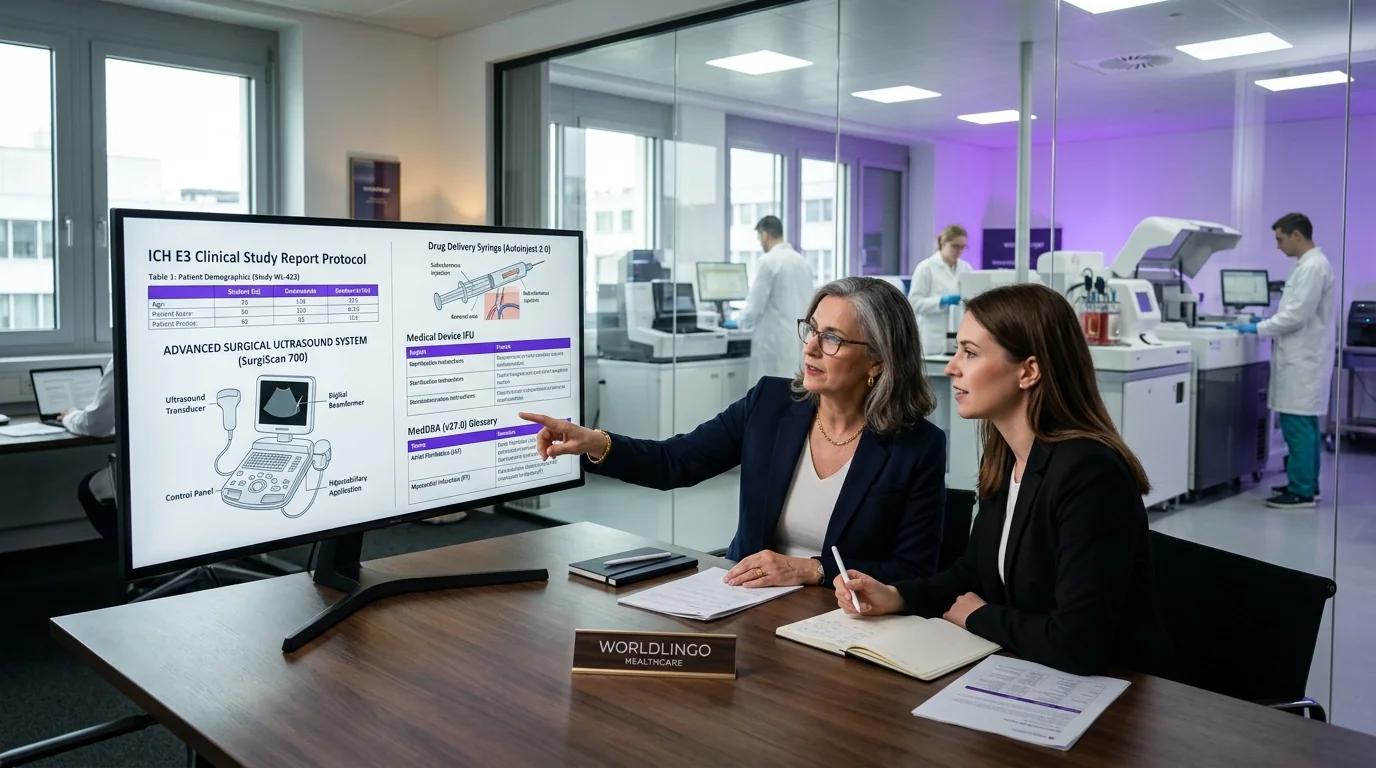
Medical Device Localization Services: ISO 17100 Compliance and Multilingual Documentation
Localization for medical devices is a compliance engineering task, not just translation. Learn ISO 17100 workflows, terminology management, and software/website localization best practices.
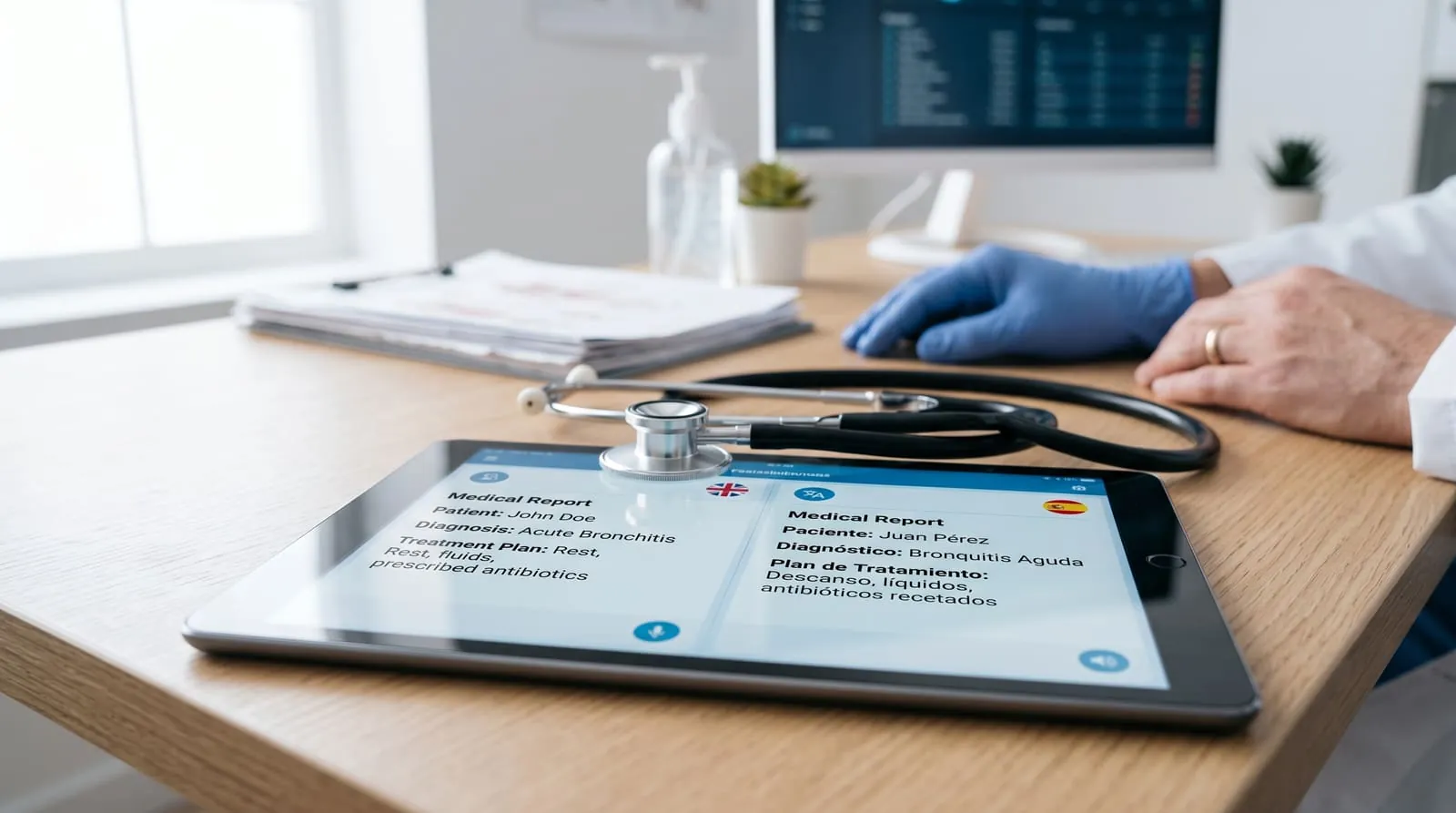
Medical Device Localization: Don't Let Translation Undermine Compliance
A Class IIb device is ready for the EU market. Technical documentation is translated. Then the notified body flags a detail: the German IFU uses "Warnung" where the English says "Caution." Under EN ISO 15223-1, those terms map to different risk levels. Wrong translation, non-compliance with EU MDR 2017/745 Annex I, Section 23.
That's not a language issue. It's a compliance issue.
Many device makers treat localization as "translate the manual" until they receive a non-conformity report. In medical, localization services are part of technical documentation compliance engineering.
Three Dimensions That Make Medical Localization Different
Unlike general software localization, multilingual localization in medical must satisfy three constraints simultaneously:
- Regulatory constraints: EU MDR/IVDR, FDA 21 CFR Part 820, and China's Medical Device Supervision Regulation set explicit language requirements for labels, IFUs, and UDI.
- Terminology constraints: Standard terminologies like MEDDRA, SNOMED CT, and ICD-11 cannot be freely paraphrased. Translating "adverse event" as "side effect" changes the nature of a pharmacovigilance report.
- Traceability constraints: ISO 17100:2015 requires a TEP (translation-editing-proofreading) workflow with documented qualifications, versions, and review records for each step.
Stack these three, and medical localization cannot be sold on a per-word rate alone.
Software and Website Localization: Compliance Risks Hidden in the UI
Medical software localization is often underestimated. IVD instrument interfaces, remote monitoring platforms, patient portals—once multilingual, specific risks emerge:
- Hard-coded strings: Units, date formats, decimal separators. German uses "1.000,5" for one thousand point five; English uses "1,000.5". Misreading a value in a lab is a patient safety event.
- Embedded regulatory text: Consent forms and privacy policies in software must match local regulatory versions. Website localization cannot machine-translate GDPR statements.
- Missing context: Is the "Run" button "start" or "flush"? Without context, translators guess. We require screenshots or pseudo-localization builds.
A practical step: freeze strings and annotate context before software localization begins. Cheaper than rework.
Terminology Management in Product Localization: Align Before Audit
Terminology inconsistency is the most common reason for medical documentation rejection. If "catheter" is translated two different ways in the same technical file, the auditor writes a non-conformity.
Our standard approach for medical clients:
- Build a bilingual termbase before project kickoff, locking core terms (device names, components, risk level terms).
- Bind the termbase to translation memory (TM); all translators and reviewers use the same version.
- Conduct quarterly terminology audits against updated regulations and standards.
This isn't complex, but it requires a localization provider with medical terminology management experience—not a general translation team assembled ad hoc.
A Real Rework Case
An orthopedic implant manufacturer localized surgical technique manuals into 8 languages. After delivery, the French distributor reported that the size table translated "small/medium/large" as "petit/moyen/grand," but French clinical practice uses "Ø 3.5 / Ø 4.5 / Ø 5.5" directly.
The problem wasn't language proficiency—the translator didn't know the clinical context. We adjusted the workflow: before translating technique manuals, a medically qualified reviewer confirms target-market clinical expression habits, then enters the TEP workflow. Rework costs dropped by roughly 40%.
How to Evaluate a Medical Localization Provider
Three checks:
- ISO 17100 certification with a scope covering medical translation;
- Medical-specific termbases and reviewer resources (not part-time medical students);
- End-to-end capability from software localization to website and product localization, not outsourced downstream.
In medical device localization, savings on translation fees often double during compliance remediation. Put compliance capability ahead of price when selecting a provider.
Need to assess your medical documentation localization workflow? Contact the Linguist team for a tailored assessment.
Expanding globally or tackling translation compliance?
ISO 17100 may be used as a workflow reference; review scope and quotation are confirmed per project.
Share this article